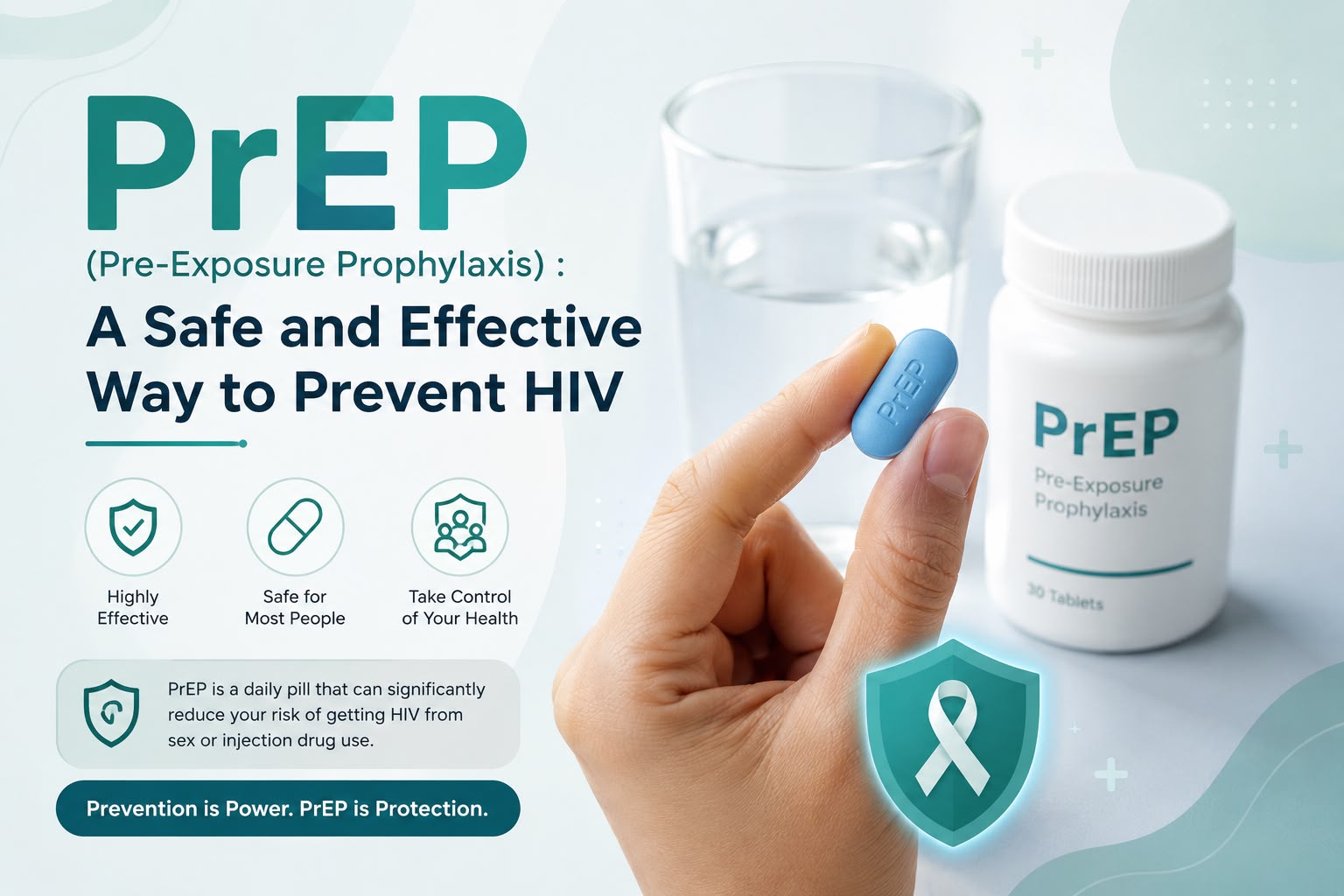
PrEP (Pre-Exposure Prophylaxis) : A Safe and Effective Way to Prevent HIV
Learn everything you need to know about PrEP (Pre-Exposure Prophylaxis), a highly effective medication that helps prevent HIV. Discover how it works, who should take it, its effectiveness, side effects, and frequently asked questions.
PrEP (Pre-Exposure Prophylaxis): What You Need to Know About HIV Prevention
Protecting your health starts with having the right information. If you’re looking for an effective way to reduce your risk of HIV, you’ve probably heard about PrEP, also known as Pre-Exposure Prophylaxis.
PrEP is one of the most effective medical advances in HIV prevention. When taken correctly, it can reduce the risk of getting HIV by up to 99% through sexual transmission.
In this article, we’ll explain what PrEP is, how it works, who should consider taking it, and answer the most common questions in simple, easy-to-understand language.
What Is PrEP?
PrEP (Pre-Exposure Prophylaxis) is a daily medication taken by people who do not have HIV but want to reduce their risk of becoming infected.
Think of PrEP as a protective shield. If HIV enters the body, the medication helps prevent the virus from establishing an infection.
PrEP does not treat HIV. Instead, it helps prevent HIV before exposure happens.
How Does PrEP Work?
When taken consistently, PrEP builds protective levels of medication in your bloodstream and certain body tissues.
If you’re exposed to HIV during sex or through shared needles, the medication works to stop the virus from multiplying and spreading in your body.
Because of this, HIV is much less likely to establish a permanent infection.
How Effective Is PrEP?
PrEP is one of the most effective HIV prevention methods available.
When taken exactly as prescribed:
- – It reduces the risk of HIV from sexual activity by up to 99%.
- – It significantly lowers the risk of HIV from injecting drug use when taken consistently.
- – Protection is highest when doses are not missed.
The key to PrEP’s success is taking the medication regularly.
Who Should Consider Taking PrEP?
PrEP may be recommended for people who have an increased risk of HIV exposure, including:
- – People with an HIV-positive partner whose viral status is unknown or not consistently suppressed.
- – Individuals who have multiple sexual partners.
- – Anyone who does not consistently use condoms.
- – Men who have sex with men (MSM).
- – People who inject drugs and share needles or equipment.
- – Individuals who have recently been diagnosed with another sexually transmitted infection (STI).
The best way to know whether PrEP is right for you is to speak with a qualified healthcare provider.
When Does PrEP Start Working?
– PrEP does not provide immediate protection.
– Depending on the type of exposure, it generally takes about:
- – 7 days to reach maximum protection for receptive anal sex.
- – Around 21 days for vaginal sex and injection drug use.
Your healthcare provider will explain when you can expect full protection based on your personal situation.
Do You Need to Take PrEP Every Day?
For most people, yes.
Daily use provides the highest level of protection and is the most widely recommended regimen.
Some individuals may be eligible for an “on-demand” PrEP schedule, but this is only appropriate for certain people and should be discussed with a healthcare professional.
Never start or change your dosing schedule without medical advice.
Is PrEP Safe?
Yes. PrEP has been extensively studied and is considered safe for most healthy adults.
Before starting PrEP, your healthcare provider will perform:
- – An HIV test
- – Kidney function tests
- – Screening for hepatitis B and other sexually transmitted infections (STIs)
Regular follow-up appointments are recommended every few months to ensure the medication remains safe and effective.
Are There Any Side Effects?
Most people experience few or no side effects.
If side effects occur, they are usually mild and temporary, such as:
- – Mild nausea
- – Headache
- – Stomach discomfort
- – Fatigue
– These symptoms often improve within the first few weeks.
Serious side effects are uncommon and can be monitored through routine medical check-ups.
Does PrEP Protect Against Other STIs?
No,PrEP only helps prevent HIV.
It does not protect against other sexually transmitted infections such as:
- – Gonorrhea
- – Chlamydia
- – Syphilis
- – Herpes
- – Human Papillomavirus (HPV)
Using condoms and having regular sexual health screenings remain important for overall protection.
What Is the Difference Between PrEP and PEP?
People often confuse these two medications, but they are used in different situations.
|
PrEP |
PEP |
|
Taken before possible HIV exposure |
Taken after possible HIV exposure |
|
Used for ongoing HIV prevention |
Used as emergency treatment |
|
Taken regularly |
Taken for 28 days after exposure |
|
Best for people with continuing HIV |
Must be started within 72 hours after exposure |
Simply put:
- – PrEP = Before exposure
- – PEP = After exposure
Frequently Asked Questions
Can I stop taking PrEP whenever I want?
Yes, but you should first discuss it with your healthcare provider. Depending on your risk level, you may need to continue taking PrEP for a short period after your last potential HIV exposure.
Do I still need to use condoms?
PrEP is highly effective against HIV, but condoms also help prevent other sexually transmitted infections and unintended pregnancy.
Can I drink alcohol while taking PrEP?
Moderate alcohol consumption does not interfere with PrEP medication. However, excessive drinking may make it harder to remember to take your medication consistently.
How often do I need check-ups?
Most healthcare providers recommend follow-up visits every three months. These visits usually include HIV testing, kidney function monitoring, and STI screening.
The Bottom Line
PrEP has transformed HIV prevention and offers peace of mind for many people who are at increased risk of HIV.
When taken consistently and under medical supervision, PrEP is one of the safest and most effective ways to protect yourself against HIV.
If you think PrEP may be right for you, don’t hesitate to speak with a healthcare provider. They can assess your individual risk, answer your questions, and help you choose the best prevention strategy for your lifestyle.
Protecting your health is an investment in your future—and PrEP is one of the most powerful tools available to help you stay HIV-free.